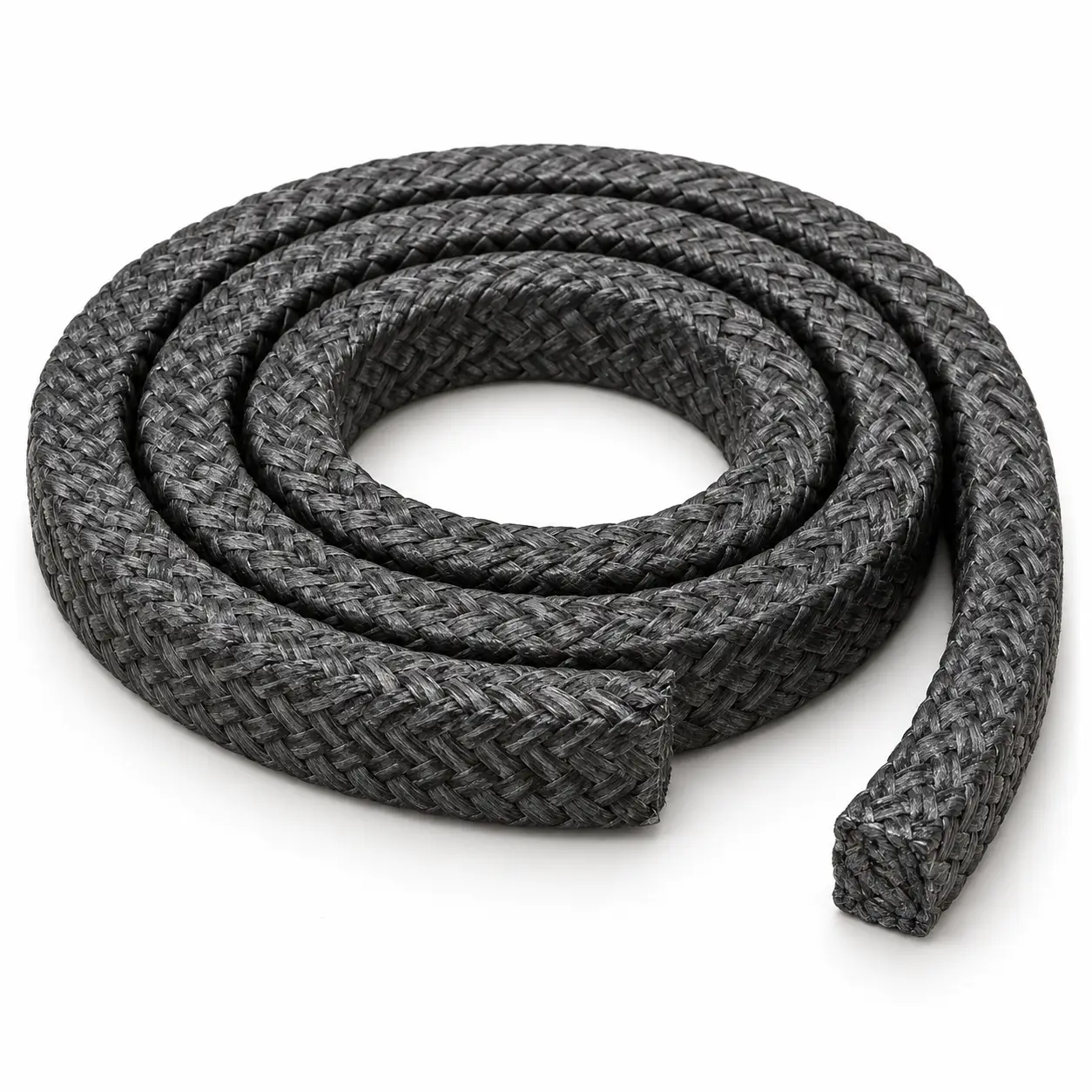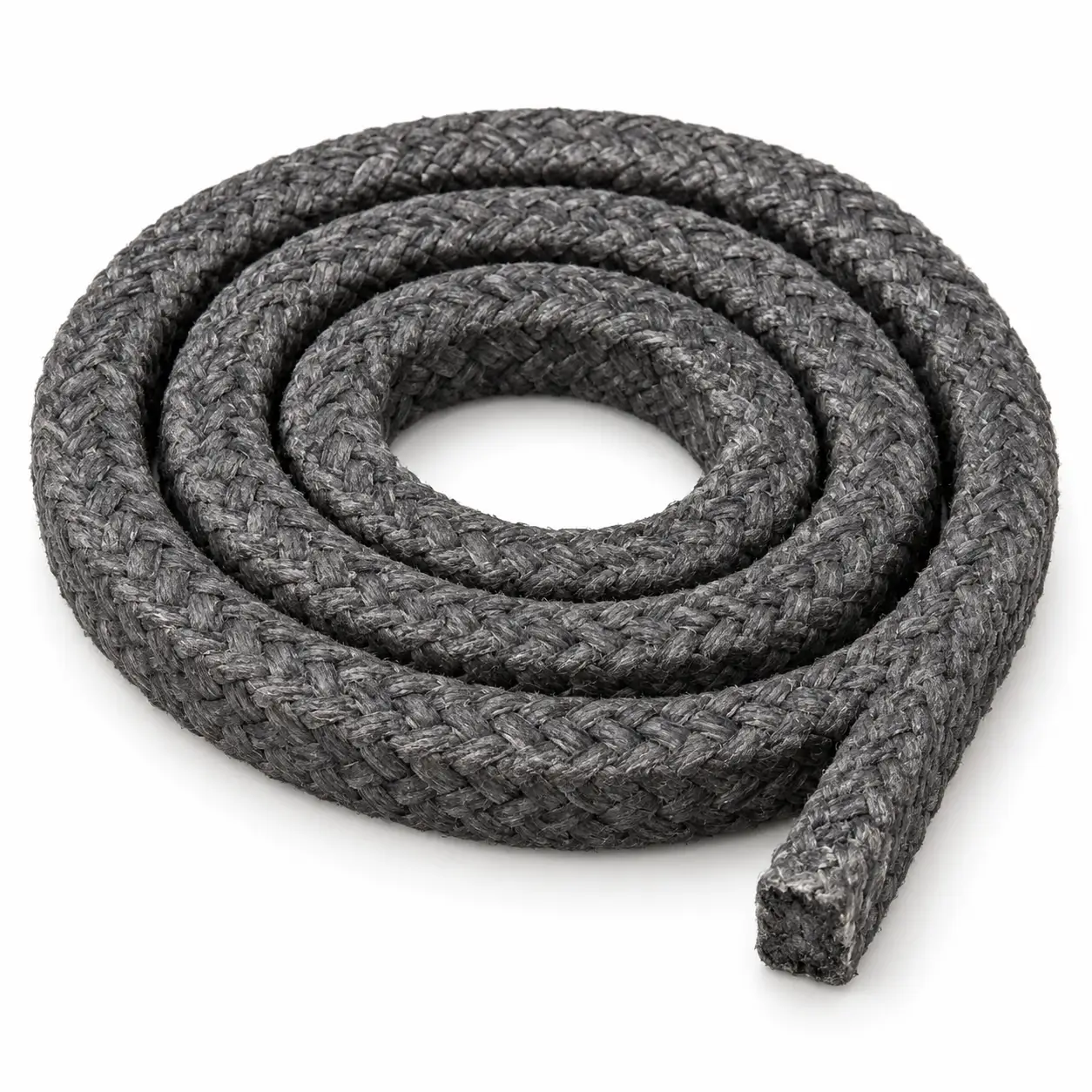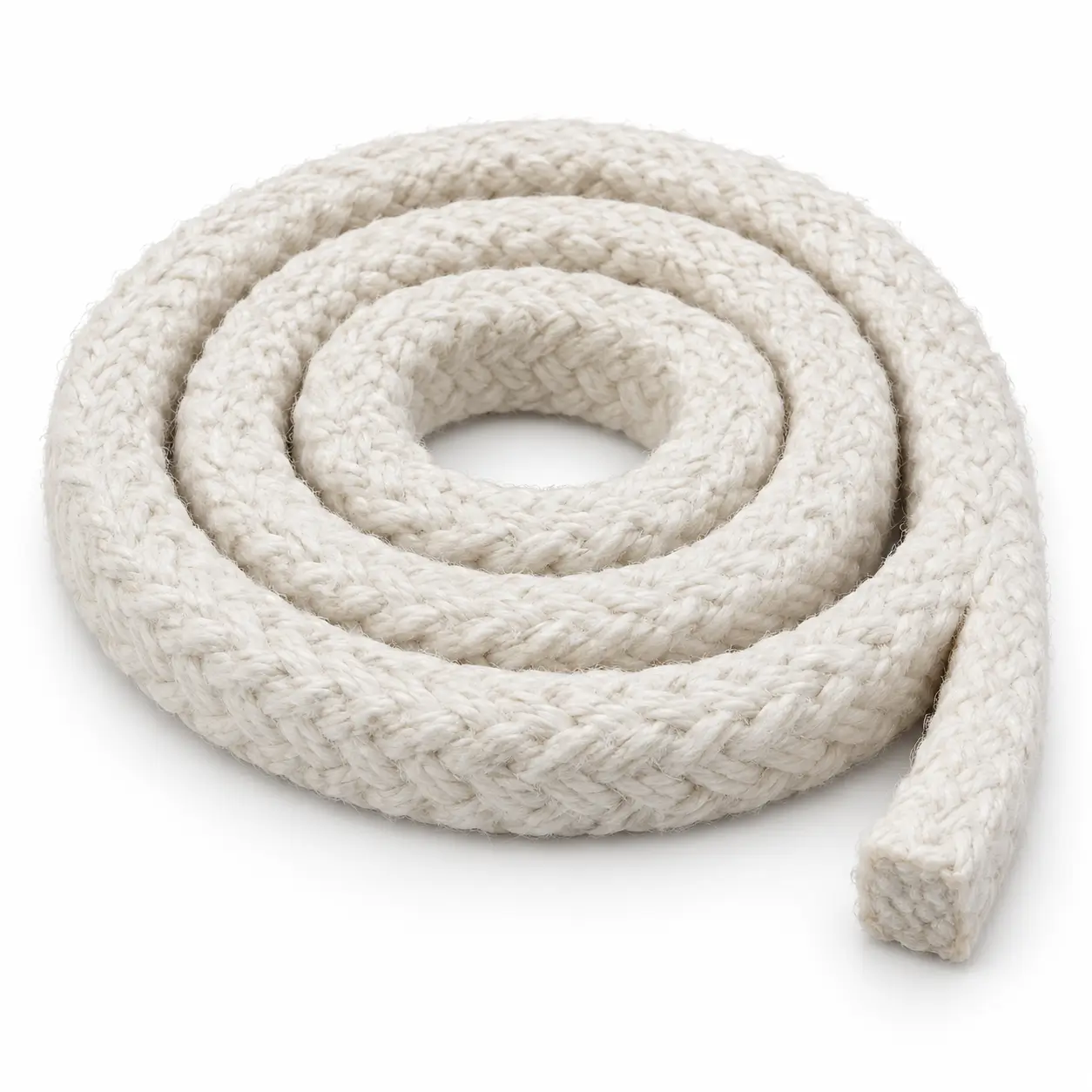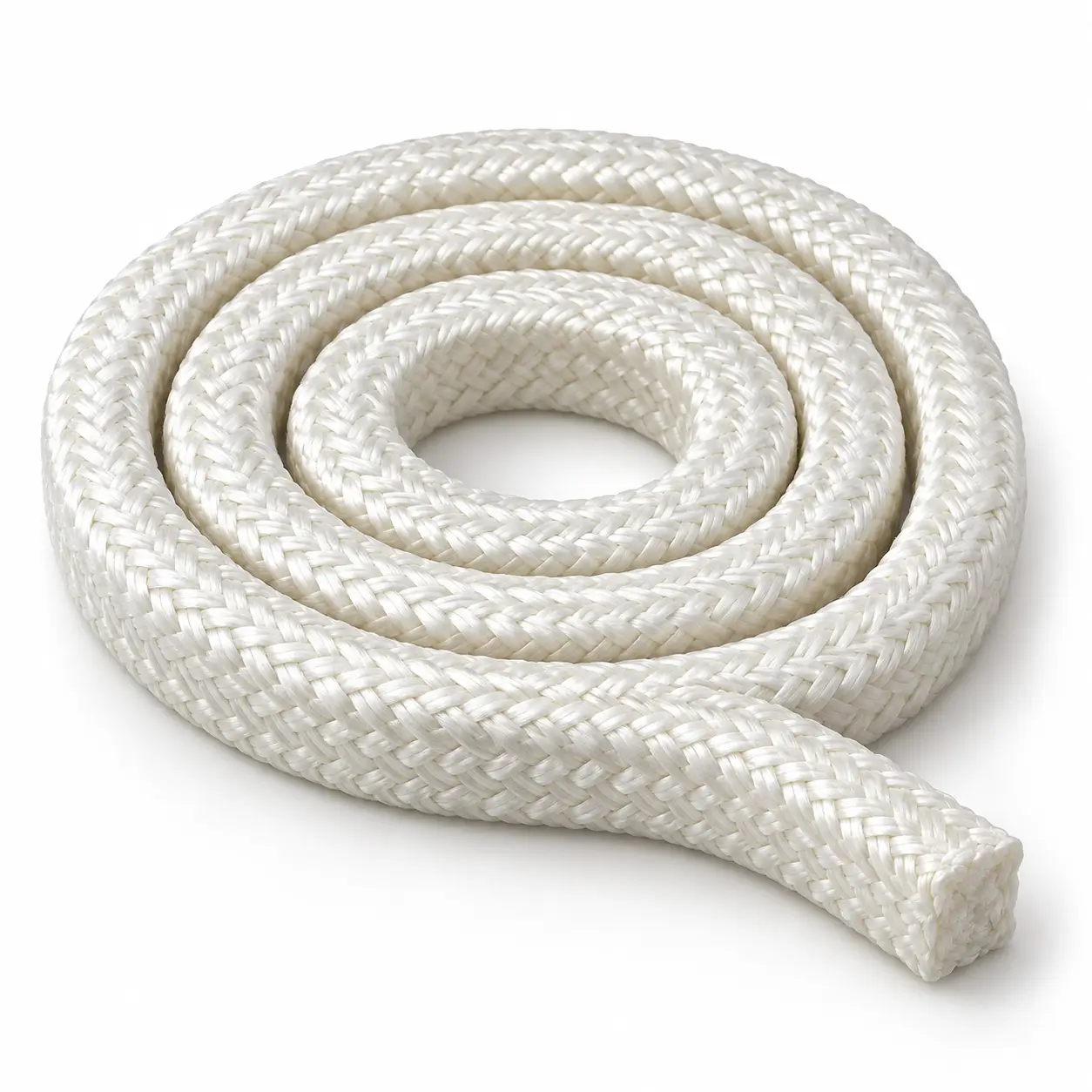

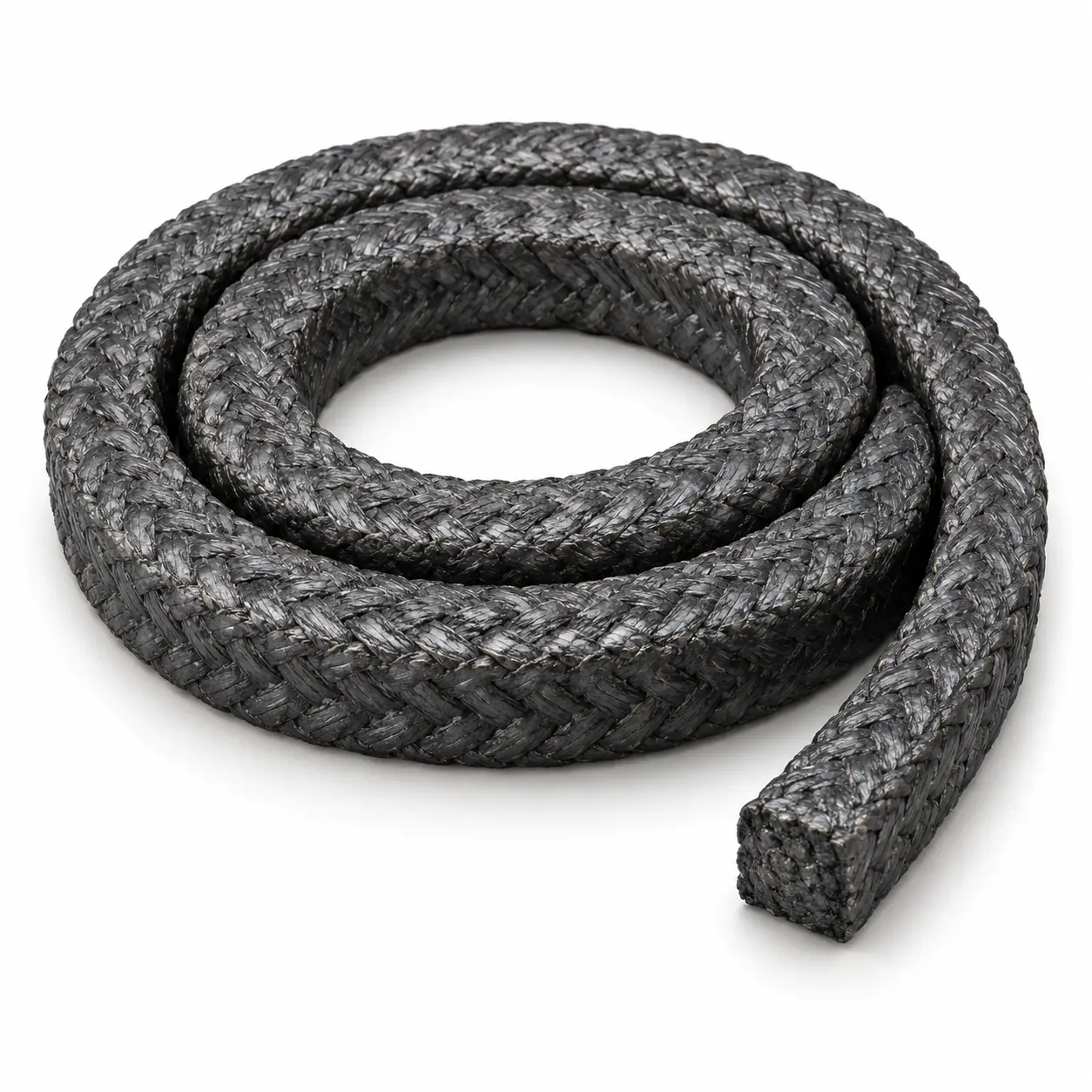
What Is Graphited Asbestos Packing with Oil and How Is It Used? It is 02:40 on a Tuesday, the feed pump on line three starts dripping, and the maintenance planner needs a sealing solution that will hold until the next planned shutdown — not a laboratory experiment. That is exactly where graphited asbestos packing with oil earns its reputation. The product is a braided rope made from chrysotile asbestos yarn, impregnated with fine flake graphite and a lubricating oil binder, then formed into square or diagonal braid cross-sections that are cut into rings and compressed inside a stuffing box. The asbestos fibres deliver heat resistance and mechanical strength; the graphite lowers friction and improves heat conduction; the oil keeps the braid supple during storage and through the first hours of running-in. Together the three components create a dense, self-lubricating seal that tolerates steam, hot water, brine, solvents and mild chemical solutions in pumps, valves, agitators and expansion joints. For maintenance engineers, that means fewer re-packing jobs and less unplanned downtime. For procurement teams searching on Google, it means a clearly specified, repeatable part number instead of a vague "asbestos rope" request. This guide explains how the material is built, which service conditions it suits, how to read a specification sheet without buying the wrong grade, how to install it so it actually lasts, and where a modern alternative may be the smarter commercial choice.
Picture a purchasing officer in Rotterdam holding a requisition that says only "graphited asbestos packing, 12 mm, 10 kg." No temperature, no pressure, no pH, no braid structure. Three suppliers quote three different products, the maintenance team installs the cheapest one, and eight weeks later the same pump is dripping again. The root cause is not the material — it is a specification that was never written down. Graphited asbestos packing with oil is a composite sealing product, and its performance depends on three variables that must be defined before the order is placed: fibre grade, graphite loading and lubricant content.
The solution is straightforward once you know how the rope is built. Chrysotile asbestos fibre is carded and twisted into yarns, then braided on a square or diagonal braiding machine. During or after braiding, the rope is impregnated with colloidal graphite dispersion and a mineral or synthetic oil binder, then dried and calendered to a precise square cross-section. The graphite fills the voids between fibres, reducing permeability and friction against the shaft; the oil film provides the initial lubrication before the packing beds in. High-quality production controls braid angle, density and dimensional tolerance, which is why two packings that look identical on a shelf can behave completely differently in service.
| Component | Typical Content | Function in Service |
|---|---|---|
| Chrysotile asbestos yarn | 70–85% | Heat resistance, tensile strength, dimensional stability |
| Flake / colloidal graphite | 15–25% | Low friction, heat conduction, reduced shaft wear |
| Lubricating oil binder | 5–12% | Running-in lubrication, flexibility, anti-stick release |
| Braid structure | Square / diagonal | Density control and leak-path resistance |
Understanding this build is what lets a buyer move from "we need some packing" to a controlled purchase order with a defined part number, a defined density and a defined test certificate.
The most common failure story we hear from plant engineers sounds like this: a saturated steam valve on a header has been re-packed three times in a year, each time with a different product pulled from the store, and each time the gland starts weeping within weeks. The stuffing box is not the problem — the material selection is. Graphited asbestos packing with oil is designed for exactly the kind of demanding, hot and slightly aggressive duty where softer packings degrade quickly.
The practical answer is to match the packing to the duty before the order is released. The oil-graphite impregnation makes the braid suitable for saturated and superheated steam, hot water, condensate, brine, seawater, lubricating oils, solvents and mild acid or alkaline solutions. It is widely used on centrifugal and reciprocating pumps, valve stems, agitators, mixers, expansion joints and marine stern glands. In low-speed, high-temperature valve service the packing's thermal stability is the main advantage; in rotary pump service the graphite's low friction coefficient protects the shaft sleeve.
| Application | Typical Duty | Fit Rating |
|---|---|---|
| Steam valve stems | Up to 450 °C, low speed, high pressure | Excellent |
| Centrifugal pumps | Hot water, brine, 8–15 m/s shaft speed | Excellent |
| Agitators / mixers | Mild chemicals, moderate speed | Good |
| Marine stern glands | Seawater, low speed | Good |
| Strong acids / strong oxidisers | Aggressive chemical duty | Not recommended |
Used inside these boundaries, the packing delivers long, predictable service intervals — and that is the number that matters to a maintenance budget.
Here is a scenario that plays out in purchasing departments every week: two quotations arrive for "graphited asbestos packing," one at a lower price per kilogram, and the buyer picks the cheaper one. The delivered rope is under-diameter, loosely braided and dry to the touch. Packing rings cut from it do not seat, the gland has to be over-tightened to stop leakage, and the shaft sleeve scores within a month. The money saved on the invoice disappears in a single unplanned shutdown.
The fix is to buy against numbers, not descriptions. Ask every supplier to confirm the cross-section tolerance, braid density, graphite and oil content, temperature and pressure limits, and pH range in writing, and to supply a batch test certificate. A serious manufacturer will have these figures ready; a trader will not.
| Parameter | Typical Value |
|---|---|
| Temperature range | −50 °C to +450 °C (steam up to +500 °C) |
| Pressure – rotary pumps | up to 25 bar |
| Pressure – valves | up to 100 bar |
| Shaft speed | 8–15 m/s |
| pH range | 4–11 |
| Density | 1.4–1.6 g/cm³ |
| Cross-section sizes | 3 × 3 mm up to 50 × 50 mm |
| Standard coil length | 5 m / 10 m / 15 m |
With these values on the purchase order, price comparisons finally become meaningful, because every supplier is quoting the same technical scope.
A very familiar complaint: the packing was correct, the pump was correct, and the gland still leaked after two days. In most of these cases the fault lies in installation. Rings cut with a blunt knife, a dirty stuffing box, rings pushed in with the cut joints aligned, or a gland tightened hard to "stop it fast" will destroy even a premium braided packing.
The solution is a short, disciplined procedure that any fitter can follow. Remove the old packing completely and clean the stuffing box with a wire brush and solvent. Measure the shaft and box to confirm the correct cross-section — the ring should compress about 10% of its height in the box. Cut each ring with a sharp, angled 45° cut, wrap it around a mandrel the same diameter as the shaft, and fit rings one at a time with joints staggered by 90°. Torque the gland finger-tight, then add a quarter turn per bolt, run the equipment and allow a controlled drip to bed the packing in before final adjustment.
| Installation Step | Target Value |
|---|---|
| Box clearance (packing to shaft) | 0.2–0.5 mm |
| Ring compression in box | approx. 10% of cross-section |
| Joint stagger between rings | 90° |
| Gland break-in leakage | 30–60 drops/min, then reduce |
| Operating leakage (water pumps) | 5–20 drops/min |
Done this way, a correctly specified graphited asbestos packing routinely runs for a full maintenance cycle instead of a fortnight.
Many buyers arrive at this product because a specification is being rewritten and someone asks, "can we replace it with something asbestos-free?" That is a valid question, and the honest answer depends on the duty. For very high temperature steam and high pressure valve service where a proven track record matters, graphited asbestos packing with oil remains one of the most cost-effective sealing solutions available.
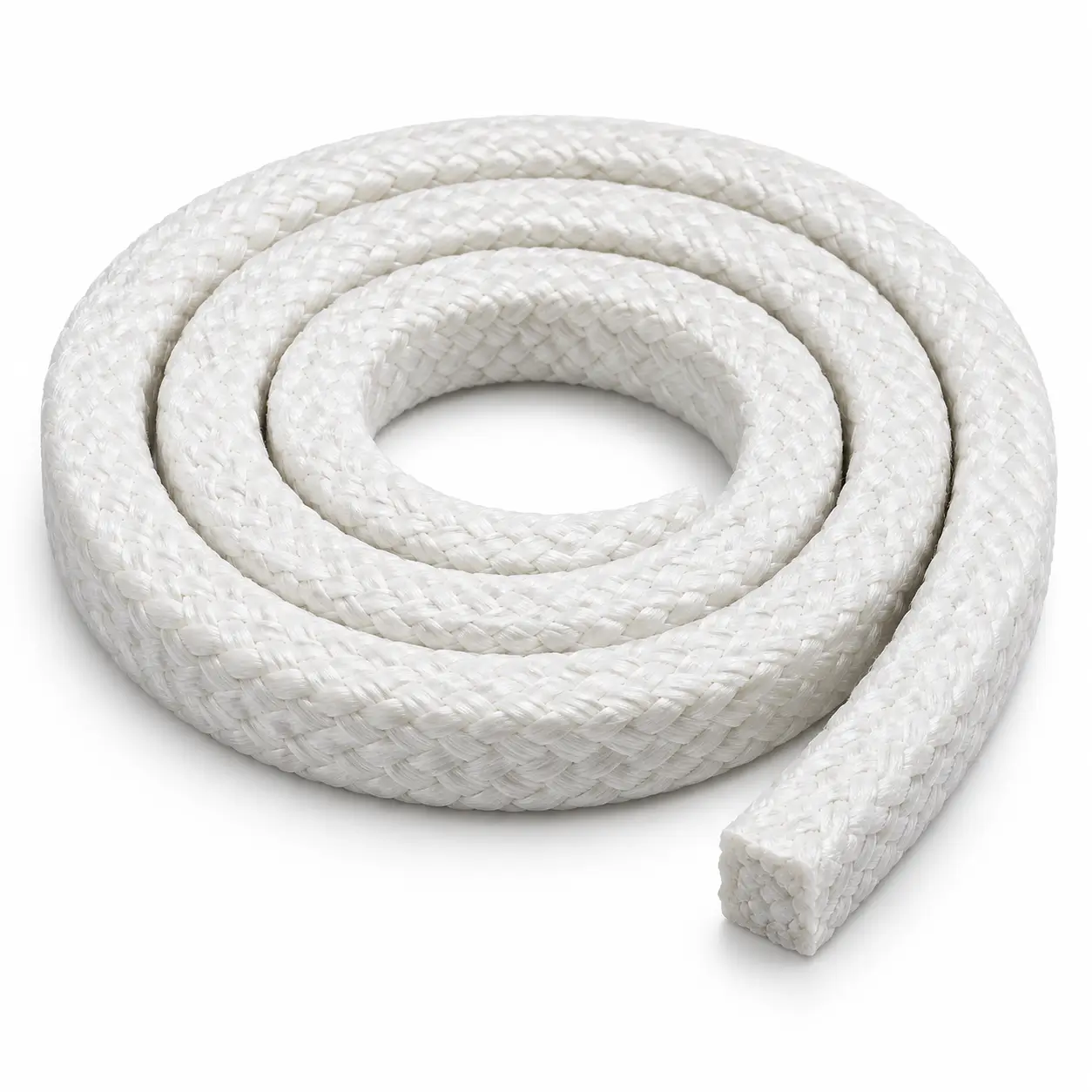
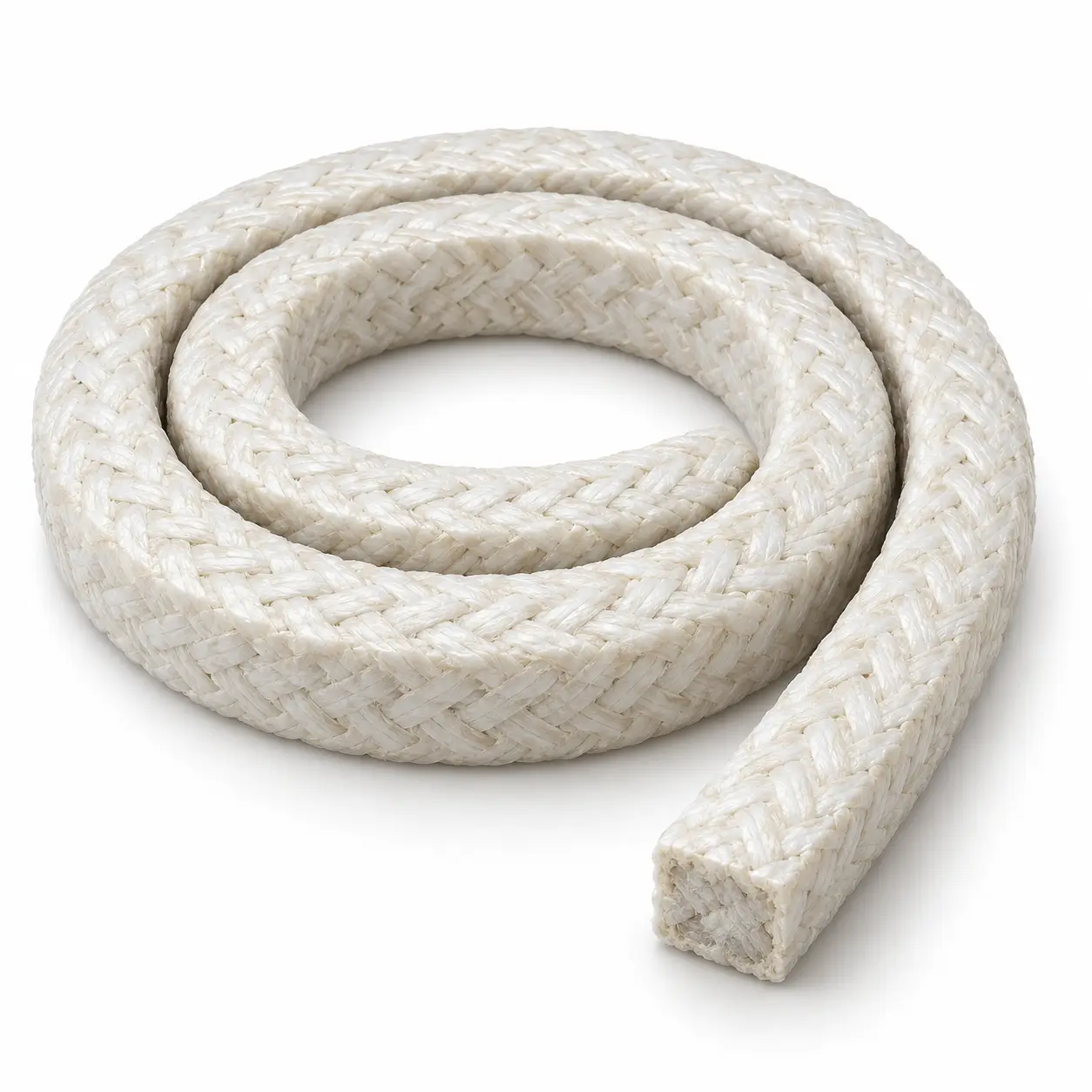
The right approach is a side-by-side technical comparison rather than a policy decision made in isolation. Aramid, PTFE and expanded graphite packings win on chemical resistance or clean handling; asbestos-graphite wins on thermal stability, mechanical strength and price per operating hour in hot, high-pressure duty.
| Material | Max Temp. | Chemical Resistance | Relative Cost |
|---|---|---|---|
| Graphited asbestos with oil | 450–500 °C | Good (mild acids/alkalis) | Low |
| Expanded graphite | 600 °C | Excellent | High |
| Aramid fibre | 250 °C | Good | Medium |
| PTFE / PTFE-graphite | 260 °C | Excellent | Medium |
A comparison table like this turns a debate into a documented engineering decision that both maintenance and procurement can defend.
The most sensitive issue for a purchasing department is compliance. Asbestos-containing materials are restricted or banned for many applications in the European Union, Australia, and parts of North America and Asia, while remaining legally used in controlled industrial sealing applications in other markets. A buyer who sources without checking local rules risks a shipment that cannot be cleared, or a product that cannot legally be installed.
The workable solution is to buy only from manufacturers who provide a complete documentation pack with every shipment, who can state the fibre type and content precisely, and who can offer an asbestos-free equivalent from the same range if local regulation requires it.
| Document | Purpose |
|---|---|
| Material safety data sheet | Hazard communication, handling instructions |
| Batch test certificate | Density, dimensions, graphite/oil content |
| Fibre composition statement | Confirms chrysotile content for customs and EHS |
| Asbestos-free alternative sheet | Substitution option for restricted markets |
Handled this way, compliance stops being a purchasing risk and becomes part of the technical value a supplier brings.
Yes, in many markets it remains available for controlled industrial sealing applications such as steam valves and hot-water pumps. Availability depends entirely on local regulation, so confirm the legal status in your destination country before placing an order, and always request the fibre composition statement together with the batch certificate.
Square braid gives a denser, more dimensionally stable cross-section and is the usual choice for pump and valve stuffing boxes where leakage control matters most. Diagonal braid offers slightly greater flexibility and is often preferred for irregular or worn boxes. If you are unsure, describe the equipment and duty to the manufacturer and let them recommend the structure.
Almost always one of four things: the wrong cross-section size, joints aligned instead of staggered, a dirty or scored stuffing box, or a gland tightened too hard during break-in. Re-check the box clearance, cut rings on a mandrel, stagger joints by 90° and allow a controlled drip during the first running hours.
Yes. Reputable manufacturers maintain parallel ranges in aramid, expanded graphite and PTFE-graphite so that a substitution can be made without changing the stuffing box dimensions. Ask for a like-for-like dimensional chart and a temperature and pressure comparison before you switch.
Ningbo Kaxite Sealing Materials Co., Ltd. manufactures braided compression packings, gland packing rings, gaskets and sealing materials for pumps, valves, agitators and marine equipment, supplying distributors, OEMs and maintenance contractors worldwide. The company solves the everyday problems described in this guide — unclear specifications, inconsistent braid density, late deliveries and missing documentation — by offering defined technical data sheets, batch test certificates, stable cross-section tolerances, flexible coil and ring formats, and a genuine asbestos-free alternative range for markets where restrictions apply. Whether you need a single trial coil of graphited asbestos packing with oil or a container load with full export paperwork, the team can confirm dimensions, graphite and oil content, temperature and pressure limits, and packing structure before shipment. Send your drawing, stuffing box dimensions or duty conditions to [email protected] and the technical team will respond with a specification and quotation. Full product information is available at https://www.mineral-fiber-packing.com.
D. E. Brewer, 2010, "Compression Packing Selection for Rotating Equipment in Steam Service", Sealing Technology, Vol. 2010, No. 8, pp. 7–11.
H. Müller and K. Schmidt, 2012, "Tribological Performance of Graphite-Impregnated Braided Packings under High-Temperature Steam", Tribology International, Vol. 52, pp. 88–96.
J. Wang, L. Chen and Y. Zhang, 2015, "Friction and Wear Behaviour of Asbestos Fibre Braided Packings in Centrifugal Pump Applications", Wear, Vol. 332–333, pp. 1120–1128.
A. R. Flitney, 2009, "Recent Trends in Compression Packing Technology", Sealing Technology, Vol. 2009, No. 3, pp. 6–10.
S. Kimura and T. Sato, 2011, "Leakage Control of Valve Stem Packings in Thermal Power Plants", Journal of Pressure Vessel Technology, Vol. 133, No. 4, 041302.
P. G. Rao and M. A. Rao, 2013, "Effect of Lubricant Impregnation on the Sealing Performance of Braided Gland Packings", Industrial Lubrication and Tribology, Vol. 65, No. 5, pp. 331–339.
F. Ahmed, 2016, "Gland Packing Friction Losses in Marine Stern Tube Sealing Systems", Proceedings of the Institution of Mechanical Engineers, Part J: Journal of Engineering Tribology, Vol. 230, No. 7, pp. 812–821.
L. Zhou and H. Liu, 2018, "Thermal Degradation of Graphite-Lubricated Fibrous Packings in Superheated Steam", Journal of Materials Processing Technology, Vol. 255, pp. 45–53.
R. Novak and J. Havel, 2014, "Comparative Study of Aramid, PTFE and Graphited Packings for Slurry Pump Shafts", Sealing Technology, Vol. 2014, No. 11, pp. 8–12.
M. Tanaka, K. Ito and S. Mori, 2019, "Standards and Test Methods for Compression Packing Materials: A Review", Journal of Testing and Evaluation, Vol. 47, No. 6, pp. 4102–4119.