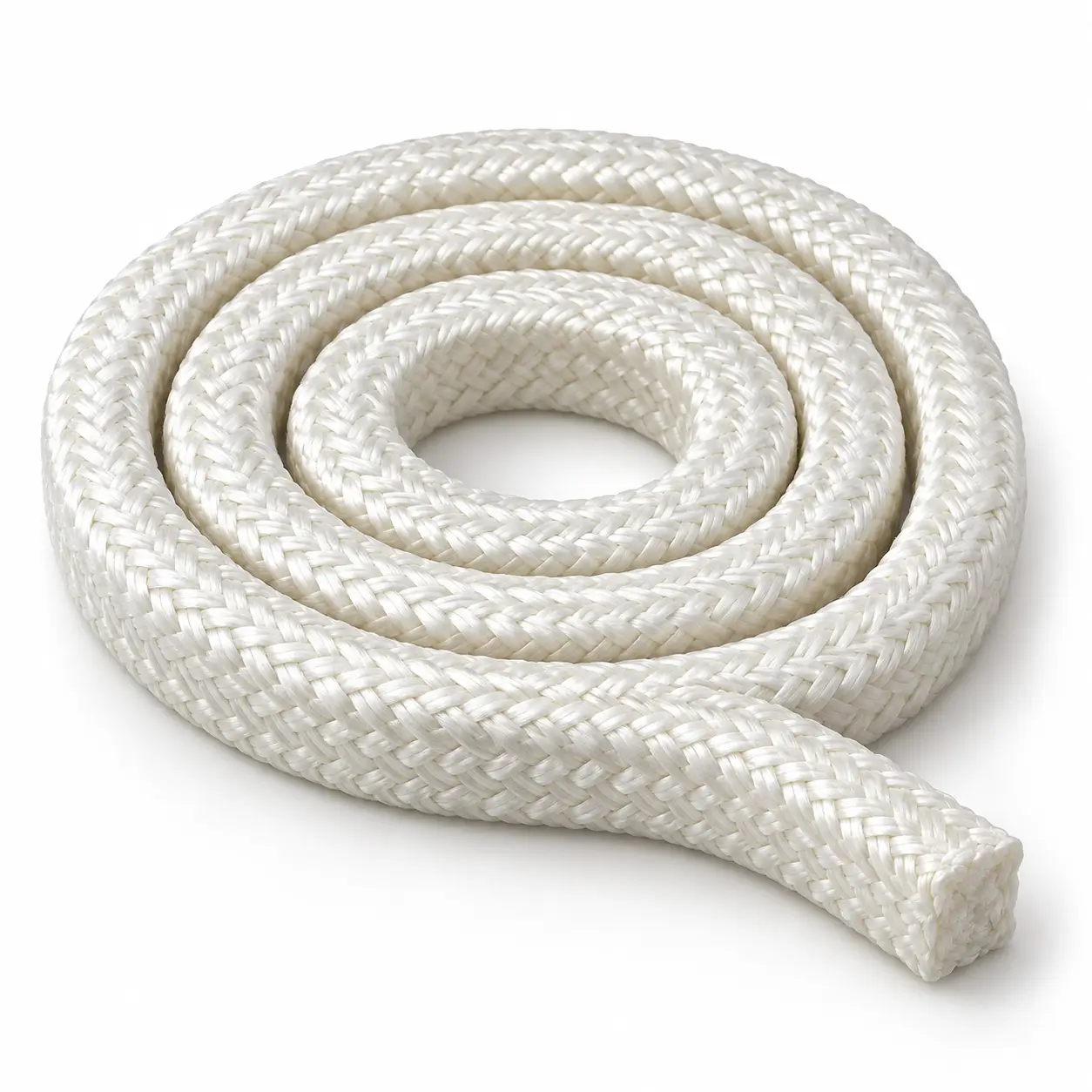
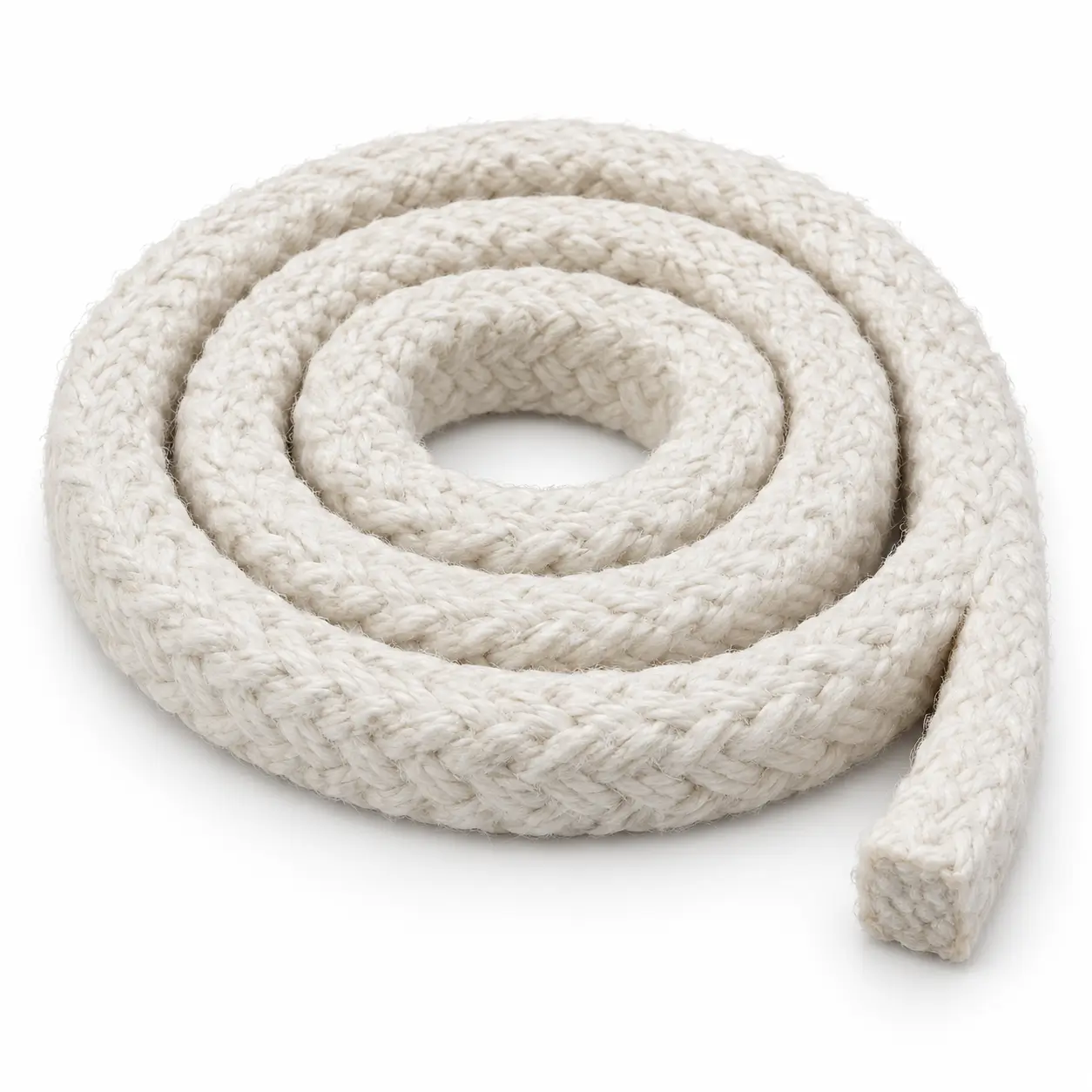
Three fiber families are not interchangeable. The right choice depends on the temperature ceiling, the pH range, and whether the seal is static or dynamic — not on price per kilogram. The tables below map each family and each impregnation to the service it actually fits.
Send Operating Conditions →| Fiber grade | Temperature ceiling | pH range | Service type | Typical application |
|---|---|---|---|---|
| Glass fiber | 600 °C in atmosphere | pH 5–9 | Dynamic / semi-dynamic | Pump shafts, valve stems, water, steam, neutral media |
| Ceramic fiber | 850 °C (fiberglass); 1050 °C (Inconel / SS / Nickel) | pH 5–9 | Static | Furnace doors, boiler manholes, kiln car seals, expansion joints, valve bonnets |
| Asbestos (P260) | 260 °C | pH 2–13 | Dynamic / static | Large rotary pumps at medium pressure; valve stuffing boxes; broad chemical service |
| Asbestos (P264) | 450 °C standard; 550 °C grade 550 | pH 4–10 | Dynamic / static | Boiler feed pumps, valve stuffing boxes, steam, hot water, alkaline solutions |
| Impregnation | What it does | Best for | Not recommended for | Used in |
|---|---|---|---|---|
| PTFE | Barrier against solids; retains elasticity | Pumps and valves in water, steam, neutral media | High-temperature static joints above 260 °C | P801P, P261, P260 |
| Graphite | Lowers friction; eases installation | Static high-temperature joints | Strong oxidizers at elevated temperature | P263, P262 |
| Oil | Corrosion resistance; longer service life | Asbestos grades in steam and hot water | Dry gas and oxidizing media | P264 |
Above 600 °C, glass fiber is out. Above 850 °C, ceramic fiber requires Inconel, SS, or Nickel reinforcement.
pH outside 5–9 rules out glass and ceramic. Asbestos covers pH 2–13 but is restricted in several markets.
Rotating shafts favor glass fiber or asbestos. Static joints favor ceramic fiber and die-formed rings.